Heating, ventilation, air conditioning: Designing more efficient extraction systems using differential pressure measurement
Bei der Optimierung von CO2-Emissionen denkt man im Industriebereich in erster Linie an Heiz- und Kühlsysteme und an Druckluftanlagen. Absauganlagen gehören aber ebenso wie Entstaubungs- oder Abgasreinigungsanlagen zu den wichtigen Systemen eines emissionsintensiven Produktionsstandortes, denn sie schützen nicht nur Personen vor gesundheitsbeeinträchtigenden Immissionen, sondern auch Maschinen oder Einrichtungen vor frühzeitigem Verschleiß oder Ausfall.
APPLICATION
The most appropriate separator or filter design demands an understanding of the particulate composition, its intensity and the facilities. These systems frequently operate in a three-shift operation and need to deliver a consistently high level of cleaning, for which there are a range of different approaches.
Conventional systems run constantly without taking into account the current load situation. This results in an extremely high energy consumption and no awareness of the system conditions. Reducing energy usage is vital, especially with regard to DIN EN ISO 50001 (Energy Management). For this reason, modern cleaning systems are equipped with the relevant sensor technology, intelligent process control and performance-related ventilation control, which not only maintains the optimal filter quality, it also reduces the energy costs to a minimum.
IMPLEMENTATION
Monitoring the filter and volume flow is one of the fundamental system tasks.
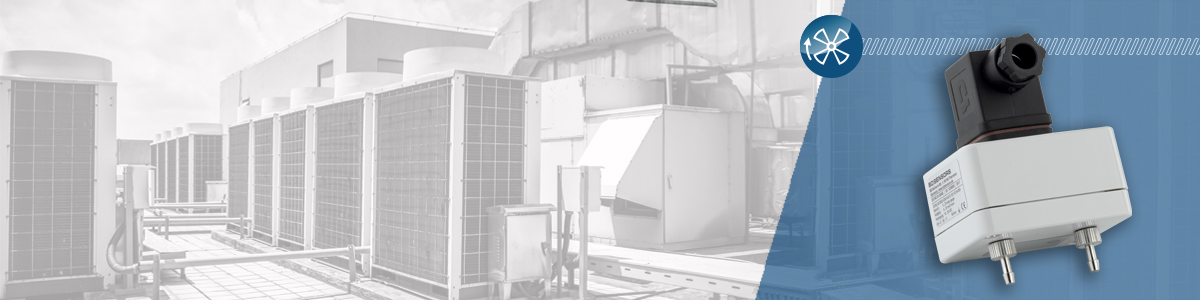
The 81.600G differential pressure transmitter, developed specifically for customers, is perfectly suited to this task. Thanks to its compact design and versatile installation options it can be integrated seamlessly in new systems and retrofitted without any problem in existing systems. It is available in a variety of unidirectional or bidirectional measurement ranges and gives a standardised output signal that is easily processed by a PLC/DDC.
In all aspects, the 81.600G therefore contributes significantly to system efficiency and to improving the climate.